TMS vs rTMS vs Deep TMS Explained: The Short Answer
If you have been comparing clinics and keep seeing TMS, rTMS and deep TMS presented as if they were three separate treatments, here is the short answer to TMS vs rTMS vs deep TMS: they are related names, not competing therapies. TMS (transcranial magnetic stimulation) is the umbrella term for noninvasive brain stimulation that uses magnetic pulses. rTMS, or repetitive transcranial magnetic stimulation, is the repeated-pulse form that the National Institute of Mental Health (NIMH) and FDA sources describe, and it is the term most clinical literature uses. Deep TMS is a device-and-coil design marketed under that name rather than a separate regulatory category.[source][source]
In everyday conversation the labels overlap, and people often say "TMS" when they mean rTMS. What actually differs between clinics is more specific: which device is used, which coil it uses, how the treatment location and dose are set, and how sessions are scheduled. Those details matter far more than the label on a brochure. This article is general education, not a recommendation for any individual; whether any form of TMS is appropriate is a clinical decision made after an evaluation.[source]
How the Terms Fit Together: A Plain-Language Comparison
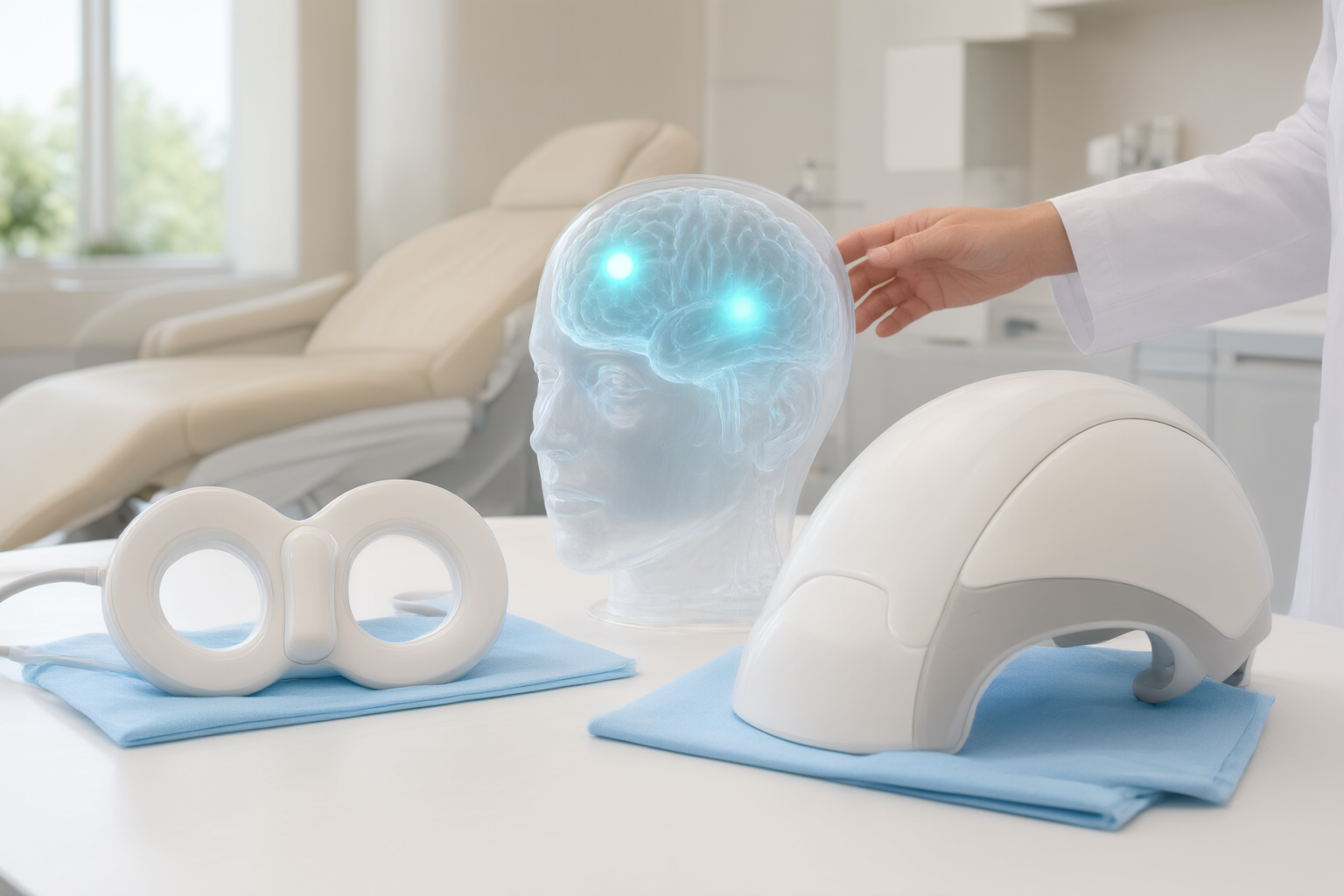
The easiest way to keep the terms straight is to notice what each one describes. TMS describes the broad category of treatment. rTMS describes the repeated-pulse technique within that category. Deep TMS describes a particular coil and device design that a manufacturer and clinics market by that name. A label alone does not tell you which option is better for a given person, and coil design and protocol details are individualized by trained clinicians.[source][source]
| Term | What it describes | Who typically uses it | What you can conclude from the label |
|---|---|---|---|
| TMS | Umbrella category of noninvasive magnetic brain stimulation | Clinics, patients, general media | It is a magnetic stimulation treatment; it does not specify device or protocol |
| rTMS | The repeated-pulse technique used in most clinical literature and regulatory documents | Clinicians, researchers, FDA and NIMH materials | It is the repeated-pulse form; session length and dose still vary |
| Deep TMS | A specific coil and device design marketed under that name | Device makers and clinics offering that system | It is one device design; the label does not establish superiority |
What an rTMS Session Typically Looks Like
NIMH describes rTMS as office-based treatment that does not require anesthesia. Sessions commonly last about 3 to 40 minutes, and a typical course is five sessions per week for four to six weeks, with accelerated protocols differing from that pattern. Session length, course length and scheduling vary by device, indication and the individualized plan, so these are general patterns rather than a promise for any one patient.[source]
If you want to see how compressed scheduling is discussed in patient terms, our overview of accelerated TMS in Houston walks through what a condensed program involves and how it differs from a standard course.
Why Coil Design and Targeting Come Up in the TMS vs Deep TMS Discussion
FDA guidance describes rTMS systems as external devices that deliver repetitive pulsed magnetic fields to activate neurons within a limited cortical volume without intentionally inducing a seizure. Consensus recommendations describe determining an individual motor threshold and treatment location for each patient. Coil design and targeting are therefore protocol variables that trained clinicians individualize rather than fixed features a patient selects in advance.[source][source]
Accelerated Protocols: A Scheduling Difference, Not a Fourth Type
Accelerated TMS refers to compressed scheduling of rTMS-type treatment, not a separate device category. A 2025 systematic review that compared accelerated protocols with standard or sham rTMS found a mixed picture: some studies suggested potential advantages for selected accelerated schedules, including certain twice-daily high-frequency and intensive iTBS protocols, while other studies found no significant difference. Small samples, heterogeneous patient definitions and limited independent replication prevent a definitive conclusion, so faster scheduling should not be read as faster remission or universal superiority.[source]
Safety Screening Applies Regardless of the Label
Whichever name a clinic uses, the safety conversation looks similar. Consensus recommendations support structured pre-treatment screening that covers seizure and neurologic history, medicines or substances that may alter seizure threshold, sleep deprivation, and ferromagnetic or magnet-sensitive material near the head and neck as well as certain implanted devices. FDA guidance emphasizes labeling, trained use, repeatable coil positioning and device-specific contraindications and warnings.[source][source]
One nuance matters: a listed risk is not automatically an absolute contraindication for every modern device. Current device labeling and a clinical evaluation are the right sources for your situation, not a self-screening checklist.[source]
FDA-Cleared vs FDA-Approved: Getting the Wording Right
NIMH distinguishes FDA clearance from approval. The first rTMS device was FDA-cleared in 2008 for depression after inadequate response to at least one antidepressant in the current episode. FDA guidance for this device class uses terms such as Class II, premarket notification, substantial equivalence and clearance.[source][source]
Questions to Bring to a TMS Consultation
You do not need to choose a label before a consultation. The useful preparation is bringing questions and your medical history so a clinician can evaluate whether TMS may be appropriate and, if so, which device and protocol fit. These prompts are discussion starters, not criteria for self-selecting treatment.[source]
Six questions worth asking
- Which device and coil does the clinic use? Ask for the specific system name so you can read its current labeling and indications.
- What does a typical session and course look like? Ask about session length, sessions per week and total course length for your situation.
- How is treatment location set? Ask how motor threshold and coil positioning are determined and repeated across visits.
- What safety screening is performed? Ask which history, medicines, sleep and implanted-device factors are reviewed before starting.
- How are accelerated or maintenance schedules decided? Ask what evidence and clinical factors guide those choices, without expecting a guaranteed outcome.
- How does telemedicine fit in? Ask whether evaluation or follow-up can be handled remotely and what still requires an in-person visit.
Frequently Asked Questions
Is TMS the same thing as rTMS?
TMS is the broad term for magnetic brain stimulation, and rTMS is the repeated-pulse form described by NIMH and FDA sources and used in most clinical literature. People often use the terms interchangeably in conversation, but the specific device and protocol are what matter.
Is deep TMS better than standard rTMS?
The public sources summarized here do not establish that one coil design is superior for every patient. Coil design and targeting are individualized protocol variables, so it is worth asking a clinician about the specific device and the evidence behind it rather than assuming "deep" means more effective.
Does accelerated TMS work faster?
A 2025 systematic review found a mixed picture: some studies suggested potential advantages for selected accelerated schedules, while others found no significant difference. Small samples and limited independent replication prevent a definitive conclusion, so faster scheduling should not be read as faster remission.
Is TMS FDA-approved?
NIMH distinguishes clearance from approval. The first rTMS device was FDA-cleared in 2008 for depression after inadequate response to at least one antidepressant in the current episode. Any indication statement should be tied to the specific device and current labeling rather than a blanket claim.
Do I need to know which type of TMS I want before a consultation?
No. Device, coil and protocol selection is a clinical decision made after safety screening and evaluation. The useful preparation is bringing questions and your medical history, not choosing a label in advance.
Are the side effects different between TMS, rTMS and deep TMS?
NIMH describes common short-term effects such as scalp discomfort, facial or jaw muscle sensations, mild headache and brief lightheadedness, and notes that seizure is possible but uncommon when expert safety guidance is followed. Device-specific warnings come from current labeling, and no option should be described as side-effect-free.
References
- APA and NNDC consensus recommendations for clinical rTMS in major depressive disorder — pmc.ncbi.nlm.nih.gov
- Comparison between accelerated and standard or sham rTMS in depression: 2025 systematic review — pubmed.ncbi.nlm.nih.gov
- FDA Class II special controls for rTMS systems used for major depressive disorder — www.fda.gov
- NIMH brain stimulation therapies: rTMS patient evidence summary — www.nimh.nih.gov




Leave a Reply